Our Heritage
Tracing the Bold History of Tau Kappa Epsilon from 1899 to Today
Our Heritage
Tracing the Bold History of Tau Kappa Epsilon from 1899 to Today

Our Beginning, Growth and Development
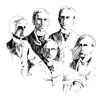
Tau Kappa Epsilon was founded on January 10, 1899, at Illinois Wesleyan University by five determined students: Joseph L. Settles, James C. McNutt, Clarence A. Mayer, Owen I. Truitt, and C. Roy Atkinson. They established a new society, the Knights of Classic Lore, seeking to create a brotherhood based on character and merit, rather than wealth or social standing. The initial meeting took place at 504 East Locust Street, and soon after, James J. Love became the first new member. The organization’s purpose was to foster mental, moral, and social development in college men.
At a time when most fraternities prioritized prestige and social elitism, the Knights of Classic Lore envisioned something unique. They aimed to establish a fraternity founded on integrity, inclusion, and merit. Although Phi Delta Theta alumni tried to guide the group into becoming a chapter of their fraternity, the Knights stood firm. Despite three petition attempts from 1902 to 1906, their requests were denied. This inspired the group to forge their own identity, adopting the Greek name Tau Kappa Epsilon and establishing the first TKE house, the Wilder Mansion.
In 1907, as TKE members debated another attempt to join Phi Delta Theta, Wallace G. McCauley delivered the defining speech "Opportunity Out of Defeat," advocating for independence. His call to pursue national status as TKE sparked a pivotal shift, leading members to abandon merger efforts and commit to growing TKE as a distinct and self-sustaining fraternity.
The momentum from McCauley’s speech culminated in the first Conclave on February 17, 1909, held at the Alpha Chapter house in Bloomington, Illinois. Clyde M. Leach and Orrie Reeser conducted the meeting, which formally elected the first Grand Officers and laid the foundation for national expansion.
Following the constitution’s ratification, Beta Chapter was installed at Millikin University on April 17, 1909. Petitioning groups were carefully vetted, and traditions like Installation Banquets were introduced. These customs became a staple of TKE’s growth culture.
Held on February 11–12, 1910, the Second Conclave took place at the Alpha Chapter house in Bloomington. Attended by the seven Grand Officers and two delegates from both Alpha and Beta chapters, the event featured a formal banquet and a social smoker. Business was conducted seriously, with Grand Prytanis Lester H. Martin being re-elected. The occasion solidified the Fraternity's emerging structure and tradition of Conclave gatherings.
In 1912, the Gamma Chapter was installed at the University of Illinois. The three founding chapters—Alpha, Beta, and Gamma—formed an equilateral triangle geographically, inspiring the triangle badge design that symbolizes TKE’s unity and purpose.
World War I temporarily slowed fraternity activities, but TKE persisted. With many members joining the military, the Fraternity adapted by creating Regions and Chapter Advisors. By the end of the war, TKE had earned respect for its service and resilience.
The post-WWII era sparked unprecedented growth. From 1949 to 1959, TKE more than doubled its size—granting nearly 90 new charters and initiating over 39,000 members. TKE’s reputation as a leading national fraternity was firmly established.
TKE’s leaders wisely chose not to stretch resources thin by trying to keep all chapters active during the war. Instead, they focused on post-war revitalization. This plan enabled rapid recovery and expansion in the years following the conflict.
During both World Wars, countless Tekes served honorably in the U.S. Armed Forces. In World War II alone, over half the Fraternity’s members wore the uniform of military service. Many rose to prominent ranks, including generals, admirals, and notable specialists like Dr. Irvin P. Krick, who helped set the date for the D-Day invasion. Nearly 200 Tekes gave their lives in service, and many others were decorated for bravery and leadership.
Thanks to the leadership of Dr. R.C. Williams and a team of dedicated Traveling Supervisors, TKE completed its post-war recovery with remarkable speed. By 1949, nearly all previously dormant chapters had been reactivated, and 28 new chapters were installed. The Fraternity’s membership surged past 16,000, and TKE successfully expanded into the South with the addition of five former Alpha Lambda Tau chapters. These achievements positioned TKE as one of the fastest-growing and most resilient fraternities in the nation.
In the early 1950s, under the leadership of Grand Prytanis James C. Logan, Tau Kappa Epsilon created the TKE Housing Fund to assist chapters in purchasing or constructing fraternity houses. This initiative empowered local chapters with the resources to build stable, long-term homes, and helped expand TKE’s presence on campuses across the country. The fund became a crucial tool in supporting the Fraternity’s post-war growth.
TKE focused on stability, expanding its educational foundations, adopting technology, and launching new service programs. The passing of Founders Mayer and McNutt marked the end of an era, but the spirit of brotherhood endured.
In the 1960s, Tau Kappa Epsilon produced its first professionally made promotional film, The Fraternity For Life. Featuring undergraduates from Kansas, Missouri, and California, as well as alumni like Ronald Reagan and Stan Kenton, the film captured the spirit and values of TKE. It became a powerful recruitment and public relations tool, showcasing the Fraternity’s lasting impact on its members.
At the 1918 Conclave in Chicago, as World War I impacted campuses across the country, Harold P. "Tex" Flint was elected Grand Prytanis. His leadership came during a time of crisis, when many chapters were inactive due to members serving in the military. Flint played a crucial role in guiding the Fraternity through wartime, helping to stabilize operations and develop new systems such as the appointment of Regional Officers and Chapter Advisors. His tenure laid the groundwork for the strong centralized leadership that would become a hallmark of TKE.
In 1919, Nu Chapter at the University of California became the first TKE chapter on the Pacific Coast. Despite initial hesitations due to geographic distance, this expansion affirmed TKE’s national aspirations and commitment to coast-to-coast brotherhood.
In 1915, Tau Kappa Epsilon established its first chapter outside Illinois at Iowa State College. This milestone marked TKE’s transition to a national fraternity and its acceptance into the National Interfraternity Council.
By 1921, with 14 chapters in place, the need for centralized leadership led to the creation of the Executive Secretary position. Tex Flint became the first to hold this role, and the National Office was established in his home in Lombard, Illinois.
In 1924, TKE celebrated its 25th anniversary with a Silver Jubilee Conclave in Bloomington. All five Founders attended, and a commemorative plaque was placed at Illinois Wesleyan University. This milestone reinforced the Fraternity’s founding vision and values.
Between 1921 and 1930, TKE grew steadily, reaching 32 chapters by its 19th Conclave. This expansion marked the completion of the Greek alphabet and brought the Fraternity to national prominence, despite the passing of Founders Truitt and Atkinson during this time.
During the Great Depression, TKE focused on survival and internal strength. Despite financial struggles, the Fraternity added new chapters and absorbed Sigma Mu Sigma. Devoted leaders preserved the organization, earning them the title of National Founders.
Between 1935 and 1941, TKE emphasized fiscal responsibility and chapter development. With tensions rising globally, leadership changes and the relocation of the National Office to Bloomington helped prepare the Fraternity for wartime challenges.
TKE continued operations during WWII, even as most chapters became inactive. TKE alumni answered the call to service in large numbers and created a wartime newsletter, Teke Life, to keep members connected. The Fraternity also launched the Teke Loyalty Fund to sustain operations.
With the end of WWII, TKE reactivated chapters and launched new ones, growing to 70 active chapters by 1949. The Fraternity entered the South for the first time, merged with Alpha Lambda Tau, and celebrated its 50th anniversary with major accomplishments.
In 1944, Dr. R.C. Williams became Grand Prytanis at a crucial time in TKE’s history. With the Fraternity recovering from the impact of World War II, Dr. Williams led the charge in reactivating dormant chapters and planning for post-war growth. His leadership emphasized optimism, strategic planning, and alumni involvement. Under his guidance, the Teke Loyalty Fund helped restore financial stability, and a team of Traveling Supervisors was deployed to assist in revitalizing chapters nationwide. His legacy is one of renewal, positioning TKE for its historic rise in the post-war years.
The 1950s introduced national leadership training conferences, professionalized executive staff, and saw the establishment of a permanent headquarters in Indianapolis. These developments supported chapter success and strategic growth.
TKE’s explosive post-war growth would not have been possible without the vision and commitment of key Fraternity leaders. Fraters R.C. Williams, Leland F. Leland, James C. Logan, and Frank B. Scott were honored as Expansion Leaders for their pivotal roles in guiding TKE’s development during the 1940s and 1950s. Their leadership helped establish the Fraternity as one of the largest and most respected in the nation.
The 1960s marked the end of an era with the passing of the last two living Founders of Tau Kappa Epsilon. Clarence A. Mayer died in 1960, followed by James C. McNutt in 1962. Both remained active and dedicated to the Fraternity throughout their lives. Their deaths symbolized the closing chapter of TKE’s founding generation and reminded members of the legacy and vision on which the Fraternity was built.
In 1966, TKE lost many of its leaders. Past Grand Prytanis Tex Flint died February 21, while past Grand Prytanis L.W. Tuesburg died June 10, and incumbent Grand Prytanis J. Russel Salsbury, the first Grand Prytanis to die during his term, died June 3.
Donald H. Becker assumed the office of Grand Prytanis after Frater Salsbury's death and pledged himself to continue the policies and fulfill the goals of his predecessor.
The 1960s also brought about solidification in the number and quality of fraternity houses owned by TKE chapters. The 1963 NIC Yearbook listed Tau Kappa Epsilon as owning 165 houses, far more than any other national fraternity. In 1969 it was revealed that the TKE House Fund, Inc., created in 1953, had loaned money to over 134 chapters to buy, build, or improve their physical facilities and had a total worth of over $1,000,000.
J. Russel Salsbury was re-elected Grand Prytanis at the 33rd Conclave in 1965, held in Toronto—the first Conclave outside the United States. His leadership emphasized modernization and expansion, including improvements to staff structure, alumni engagement, and chapter services. The Fraternity also began preserving its history more intentionally and launched new programs like the alumni dues initiative and expanded educational foundations.
In 1972, TKE opened its first purpose-built headquarters in Indianapolis. The Fraternity also updated its ritual and launched anniversary celebrations to honor its 75 years of existence.
The 1980s brought innovation and transformation to TKE. The Fraternity introduced regional leadership conferences, modernized recruitment tools, and launched national branding efforts like "The Winning Tradition." The organization saw an Increased focus on alumni engagement and risk management, reflecting evolving campus climates.
In 1984, TKE honored President Ronald Reagan with its highest award, the Order of the Golden Eagle, during a White House ceremony. Despite membership challenges and rising legal pressures, the decade showed TKE’s commitment to adapting while holding firm to its founding values.
In 1984, TKE honored Frater Ronald Reagan with the Order of the Golden Eagle at the White House, highlighting TKE's national prominence and the lifelong commitment of its members.
By the late 1980s, risk management and declining membership challenged all fraternities. TKE responded with new education and initiation policies to maintain safety and engagement.
TKE addressed declining membership with prompt initiation policies, eliminated “little sister” groups, and launched its first website. It also navigated financial challenges through strategic planning.
The Centennial Celebration took place in seven cities across North America on January 9, 1999, counting down to midnight on January 10th. Each of the sites was linked via satellite to Bloomington, Illinois, where the Knights of Classic Lore had begun 100 years ago.
In 1999, the 50th Conclave, known as the Centennial Conclave, was held in Indianapolis, Indiana. The Indianapolis Scottish Rite Cathedral was the opening site of the Conclave that saw Lon G. Justice elected as Grand Prytanis.
New leadership brought renewed focus on membership and operations. With the retirement of T.J. Schmitz, TKE welcomed William J. Metzger, a decorated veteran, as its new CEO.
With renewed leadership, strategic growth, and a bold commitment to member development, TKE entered its second century. The focus remained on scholarship, leadership, character, service, and brotherhood—a lifelong journey for men of integrity.
Symbols

Apollo

Badge
Unique in its design and distinctiveness, the badge has never been changed since its adoption. The meaning and connotations of the badge are revealed to members during their initiation.

Carnation
Coat-of-Arms
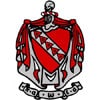
Distinctive and beautiful, the TKE Coat-of-Arms is vastly unique. It was modified slightly several times during the early years of Tau Kappa Epsilon; the present Coat-of-Arms, adopted in 1926, was designed by Dr. Carlton B. Pierce and Ms. Emily Butterfield.
The Coat-of-Arms may be used only by official members of the Fraternity on stationery, jewelry, and other personal effects, and is used by the Fraternity upon its official stationery, membership certificates, and other documents.

Flag
Founders' Day

Horseshoe
The original horseshoe was lost during World War II at the Alpha-Chi Chapter, and was replaced with a new horseshoe to continue the tradition. In mid-1995, the original horseshoe was discovered by Past Grand Prytanis Rodney Williams among artifacts belonging to Alpha-Chi Chapter, held for years by a charter member. At the 49th Biennial Conclave, the original TKE horseshoe from Omicron Chapter was displayed, along with the story behind its loss.

Symbol
About the Declaration of Principles
National Founder William Wilson spent many weeks during the winter months of 1907-1908 writing and preparing the Declaration of Principles for presentation to the Fraternity. Never once modified since its original drafting, the Declaration of Principles stands today as the most important document in the Fraternity. It codifies the basic beliefs of Tau Kappa Epsilon and states two great dangers in college fraternity life: an attitude of exclusiveness toward non-fraternity men and a bitter and unfriendly spirit toward other fraternities on campus.
We, the members of Tau Kappa Epsilon Fraternity, hereby declaring our strict adherence and unswerving fidelity to what we believe to be the basic principles of true friendship, do ordain and adopt this our Declaration of Principles.
The object of this Declaration is to codify the settled convictions of this fraternity into abiding form to guide fraternal action and conduct for all time to come. And to the principles hereinafter enunciated, we individually and collectively pledge our unreserved allegiance.
Man is a social being. Our whole structure evidences the absolute interdependence of man. Reclusiveness is dwarfing to man's best qualities. Intimate and frequent contact with our fellows is necessary to symmetrical development. As a consequence, organizations whose purpose is to promote these ends are to be fostered and encouraged.
We believe that at no other period in the life of a man is the time more opportune for the fostering of such qualities than during the years of his college career. Then mind and heart are in their most receptive condition, for it is the formative period of life.
We regard mental development as of vital importance, but of equal consequence is the acquisition of a knowledge of men and a proper conception of their relation to one another. This is not obtained from texts and lectures, but from actual and intimate intercourse with men. To promote these ends is the avowed and earnest purpose of this fraternity. Fully realizing the burdens of this duty, we enter upon its performance with the conscientious purpose of adequately meeting its demands.
We maintain that exclusiveness is the direct antithesis of a true fraternity. We condemn the un-American policies of some of the leading college fraternities of the country in their attitude of contempt to all who are without the bonds of fraternities, regardless of character, ability or personal merits. Such policies we seek to avoid, as they are destructive of the very ends of true fraternity.
We believe that a fraternity should be a brotherhood in conduct as well as in name. "Faith without works is dead." Pledges of brotherhood not succeeded by observance in conduct are as "sounding brass and tinkling cymbal." By the tenor of our daily action we should evidence our devotion to the principles we have solemnly obligated ourselves to observe.
The duties and obligations that subsist between the sons of the same mother should subsist between brothers in the sacred bond of this fraternity. The instinct to the observance of mutual duties that common blood supplies, must be furnished by the pledges of our ritual.
We believe that the essential elements of true brotherhood are love, charity, and esteem; love, that binds our hearts with the sturdy chords of fraternal affection; charity, that is impulsive to see virtues in a brother and slow to reprove his faults; esteem, that is respectful to the honest convictions of others and that refrains from treading upon that which is sacred to spirit and conscience; these are the triple obligations of every brother in the bond.
We believe in secretism in so far as it enables a fraternity to protect the confidence of the brotherhood. Secrecy that is promoted for selfish purposes or utilized to cloak fraternal wrong-doings we unsparingly condemn. We uphold this policy in so far as it is necessary to insure the dignity of our ritualism and the privacy of our internal affairs. As secrecy is employed to protect and perpetuate the sanctity of the family relation, so we enlist the advantage of secrecy to preserve inviolate the confidences and sanctities of the brotherhood.
Toward other fraternities we believe we should maintain an attitude of dignity and respect, recognizing their merits and studiously avoiding their evils. We believe our relation to them is, in a measure, competitive, and that we should endeavor to excel them in the fields of college activity.
We maintain that competition may become detrimental to any school. When healthy rivalry is followed by competition in which honorable methods are employed, it is a boon to the fraternity, and a benefit to the school, but when groveling and unprincipled means are employed, when school spirit and interest are subordinated to fraternal prejudice and selfishness, it becomes "a snare to the feet," and a detriment to the fraternity and to the school. Competition in such form we condemn, and pledge every effort to avoid.
Finally, above all else, this fraternity stands for Men. We believe in their equality in those things which the Creator has decreed they should equally enjoy. We consider no man from the standpoint of those qualities and advantages he has not attained by personal effort. We stand for men whose manhood has withstood the test of trying conditions. We deem sterling character and staunch uprightness to be necessary qualifications to membership in this fraternity. All else, though desirable, is secondary to these.
Opportunity Out of Defeat
Phi Delta Theta is indeed an honorable fraternity, and as a choice of perpetuating our own, there is no fraternity I would rather we could affiliate with than Phi Delta Theta. And to join with any lesser fraternity of which we have promise of success, I am unalterably opposed, for me it would be like a governorship aspirant, after having failed, accepting the office of poundmaster. And while Phi Delta Theta is great, and her members adorn high positions in our nation, conspicuous among whom are the members of the Bloomington alumni who championed our cause and for whose efforts in our behalf we shall never be ungrateful, still Phi Delta Theta is not free from the same criticism which can be alleged against existing fraternities of today.
The Greek letter societies have degenerated from their original purpose of the cultivation of literary attainments to mere social clubs. They have put the social feature in the ascendancy and have let everything contribute to that end. As a result there has developed a school aristocracy with all that it means - show and pretense have been magnified at the expense of true worth; they have fostered extravagance among students when economy was required; they have made secretism a fetish and symbolism an idolatry; many of the palatial home of the fraternities have been the scenes of ribald drinking bouts and excesses the worst imaginable, and too often their gruesome ceremonies have resulted in severe injuries and even the death of their initiates.
But the strongest indictment can be brought against the fraternities of today, because to its far reaching consequence, is the decline of interest in the literary societies of our schools caused by them. What is true of Wesleyan is true generally of our schools throughout our country. To be sure there are exceptions, as Beloit and DePauw, but what these small colleges have accomplished in literary attention should give us encouragement of what Wesleyan can accomplish if we properly address ourselves to this subject. It is a matter of general observation that the fraternities have drawn from the literary efforts of our school life to the social feature. While fraternity men take an active interest in literary societies and quite often represent them, still this interest is spasmodic and occasional, whereas it should be continuous and persistent throughout the college course. The literary society is the laboratory of our academic course, and the student who gives that his attention will, in after life, become a leader in thought and voice of the great social problems which are pressing for settlement.
Then, to revive the literary feature of our fraternity, which was the original object of Greek letter societies, is the greatest opportunity offered us, and the main objective which would most rapidly build us up as a national fraternity. To that end let us build our organization upon the foundation of Christian brotherhood, with the common purpose of scholarship which is the chief reason of our being here, and literary attainment which will be the chief reason of our association. Let us also, in appropriate article, in fitting language, declare ourselves against clannishness and exclusiveness, and declare for a fraternalism not to be practiced selfishly toward ourselves, but toward all men with whom we come in contact. Let us, too, pronounce ourselves against weird, awesome initiation, which may be innocent in themselves, but at the most are mere fol-de-rol and indolent waste of valuable time. In place of such let us compose a ceremony illustrative of the objects of our fraternity, open as daylight, as expressive of the eternal verities of life as a beautiful landscape revealed by a newly risen sun.
Then let us issue a magazine, quarterly as first, name it The Teke, make it attractive and artistic in form. Let it be piquant and virile in tone, representative of our fraternity, and a reflector of student life generally. And in this connection we can realize the important bearing the literary forum of our fraternity would have on our fraternity organ. Publication in the magazine would furnish an incentive to literary endeavor, and in turn the best literary efforts to the forum would furnish the bulk of the contributions required. It is not extravagant to predict that in five years we would have the finest student publication extant, and our members would be successful representatives in the interstate oratory and debate contests.
For the high objects of a fraternity which I have outlined, Tau Kappa Epsilon has been peculiarly fitted. In the first place we have been fortunate in the choice of a name. It is a name to conjure with. The combination of initials are a few of the Greek Letters which coincide with the English letters, so you see we have a name that is both suggestive of our own tongue with a Greek origin. The name falls readily on the tongue in the combination Teke, which sounds even more euphonious and popular than Deke, the common name of one of the largest of the fraternities. To appreciate the real value of our name, we have only to ask the opinion of an advertising man.
And then we have been twice advantaged in the selection of our pin. No more distinctive or appropriate pin is worn by any fraternity man than the emblem of Tau Kappa Epsilon. And last, but by no means least, we have been thrice fortunate in the securing of our members. It is indeed remarkable how we failed to git, as Jake says, the men we didn't get, and got the men we got. Truly they are the salt of Wesleyan and if Wesleyan should lose its savor, wherewith would it be salted.
Interwoven about the sentiments of our name and our pin, and ingrained in the fiber of every member is the Teke spirit - a spirit typical of our fraternity - a spirit that does not shrink from sacrifice, that knows no defeat; a spirit indomitable. A spirit which is breathed into a national Tau Kappa Epsilon would spread our organization throughout the schools of our country. Now again concerning our joining another fraternity. To do so we would give up our name, throw away our pin, and dissipate a spirit, or turn it into another channel, which would never be the same as it was under Tau Kappa Epsilon.
But if we keep Tau Kappa Epsilon intact, the Teke spirit, like Tennysons brook, will flow on forever. Fellow brothers, I have been a Teke for six years, we are assembled here as Tekes, and if you are in the same spirit I am tonight, we shall be Tekes until the moon shall wax and wane no more.
In the choice of our name, in the selection of our pin, in the securing of our members, I cannot believe that mere luck brought us our good fortune, but rather I cannot help but recognize even in our small affairs the hand of an overruling Providence. And we may believe that the Providence that has attended us in the past, will conduct us into the promised land of the future.
Let us not lack faith in this project. Remember faith as a grain of mustard will overcome mountains of difficulty. The history of other organizations lends to this encouragement. Phi Delta Theta was born a few years before the Civil War in a students room of a building at Miami University, less pretentious than the preparatory building on the Wesleyan campus, and today Phi Delta Theta is the fourth largest fraternity in existence. The Modern Woodmen were organized less than 20 years ago and now are the largest fraternal-benefit order. And so I might quote other instances of equal and stronger encouragement than these.
Fellow brothers, Tau Kappa Epsilon was conceived in the early struggles of our existence. The time is now ripe to start in on a national career, and we, its godfathers here tonight, when it as grown to be a strong and lusty organization, touching student life everywhere with the beneficence of its principles, will obtain a satisfaction inexpressible in the part we had in its inception.
Our Creed
* To Believe in love and loyalty to my College, my Fraternity, my Country, and my God;
* To Believe in the worthiness and dignity of my fellow man, and judge him solely upon his personal worth and character;
* To Believe with fidelity in the traditions and ideals of my Fraternity, and upon my sacred honor, to uphold them;
* To Believe in the constant search for truth, and through it, to seek the goal of wisdom;
* To Believe in the life based upon integrity, justice, sincerity, patience, moderation, culture, and challenge in order to serve as a responsible, mature member of society;
* To Believe in the cardinal principles of Love, Charity, and Esteem and to use them to guide my life;
* To Believe in my Fraternity as a brotherhood of gentlemen in perpetual quest of excellence as a way of life.
Desired Aims & Outcomes
Adopted by the Grand Council in 2013
Tau Kappa Epsilon aspires to become the leading 21st century college fraternity with a focused mission on building better men who, in turn, will build a better world. We will define our success by how well we:
Advance our members’ character and personal development so that society is enriched by their leadership and contributions throughout their lives;
We define this as …
We will accomplish this by …
Delivering high quality networking and learning opportunities that reinforce TKE’s core beliefs so they are displayed in the conduct of our members. We will effectively communicate our core beliefs in our programs, communications and outreach, enunciating our values so that our members and the public know what being a Teke means.
Create the definitive fraternity experience for our collegiate and alumni members so that they enjoy personal development and fulfillment through training, experience and opportunities and successfully contribute to society.
We define this as …
The Fraternity strives to make the Teke experience something special for every man – collegiate and alumnus alike. A Teke will excel academically, treat his fellow Fraters and others with respect and dignity, and have the opportunity to network with others who share these beliefs and experiences. The Teke experience begins at affiliation and continues throughout life, and the Fraternity strives to provide this experience for every man who meets our membership criteria, without regard to wealth, rank, or honor, but based on their personal worth and character.
We will measure our success by …
The number of Fraters who take advantage of our right portfolio of fraternal interaction opportunities for our members, the number of Fraters who meet our academic performance standards for our chapter and our collegiate members, and the number of alumni who are involved with the Fraternity and network with each other post-graduation. Each Frater will view the TKE experience as a significant value-added aspect of their lives.
Develop servant leaders who will make a positive impact on society and help build a better world for the generations that follow.
To us, this means …
Tekes work individually and collaboratively to make the world a better place. We do this by contributing to society through the personal growth of our members, and service to others. We aim to assist worthy causes through our time, talent, and treasure, and help make our Fraters and fellow man aware of our shared mutual obligation to build a better world.
We will measure our success by …
We will demonstrate this by partnering with worthy philanthropic causes and providing quality community service activities for our members. We will make a measurable difference in our world through our actions – in terms of time, work, and financial resources.
By enhancing our members’ character development, leadership skills, and producing a quality fraternity experience, we aim to be widely recognized as the leading college fraternity so that we will attract the highest caliber men for membership.
To us, this means …
TKE will be widely recognized as a high quality college fraternity, with exceptional members, who make a positive impact in the world. Our members and chapters represent the quintessential example of the positive elements of fraternity life, and this success is reflected at the individual, campus, community, and national levels. Our members share a common values set in a social environment that fosters personal development, responsibility, and accountability through a wide range of experiential opportunities, aimed at better preparing our members for a productive life- both in and out of college.
Tekes are men from diverse backgrounds, but the TKE Nation is one which unites us all in a common bond, where we make an immeasurably positive impact on the lives of every member, in every community, and around the world.